

Written by Dr. Maggie Hunsicker, DC, and Dr. Kailee Logan, DC | Thrive Chiropractic, Topeka, KS
If you're heading out of Topeka for Thanksgiving or Christmas with a baby bump that no longer fits under the steering wheel, you're not imagining how hard the ride feels. As a holiday travel pregnancy chiropractor in Topeka, we hear it every November: late pregnancy and long car rides are a rough mix.
TL;DR
- Late pregnancy plus holiday travel means long sits, heavy bags and nights on someone else's mattress.
- Your spine, pelvis and nervous system are already adapting to a growing baby. Hours in the car stack more stress on top of that.
- Small trip habits help: stop often, pack lighter and keep the seat supported.
- At Thrive, prenatal care uses the Webster Technique, pregnancy pillows and Insight scans.
- Call your OB or midwife first for bleeding, severe pain, reduced fetal movement or contractions.
The seat that used to feel fine starts to dig into your hips. Your low back complains by hour two. Getting in and out of the car takes a plan. This post covers why long drives feel harder now, what you can change before you leave, how we care for pregnancy at Thrive and the warning signs that mean you should call your OB or midwife first. For the full picture of prenatal care here, start with our pregnancy chiropractic page.
Why Does Holiday Travel Feel Harder in Late Pregnancy?
Holiday travel feels harder in late pregnancy because your body is already working overtime, and a long drive asks even more of it. Your center of gravity has shifted. Ligaments are looser because of the hormone relaxin. Your belly takes up space that used to belong to your lap and your seatbelt. Sitting still for hours keeps the same muscles and joints loaded without a break.
November and December add their own pile: packing bags, lifting them into a trunk, adjusting a car seat for an older sibling, unfamiliar guest beds, later nights and the mental load of schedules and family plans.
Your brain runs your body through your nervous system. When physical stress keeps stacking up, that system has more to manage. A lot of moms feel it first as a stiff low back, tight hips or a restless night before the trip even starts.
What Makes Long Car Rides Tough on a Pregnant Body?
Long car rides are tough because they combine sitting, limited movement and awkward getting in and out, often for hours at a stretch.
Sitting for a long stretch
A car seat keeps your hips and low back in one position. As the baby grows, that position gets less comfortable. Many moms notice pressure in the pelvis, aching across the low back or numbness in a leg after a couple of hours.
Getting in and out
Twisting to swing both legs out, then standing up from a low seat, is harder when your belly is in the way and your balance has changed. Doing that at every rest stop adds up.
Loading the car
Reaching into a trunk, lifting a suitcase or carrying bags while twisted is one of the easiest ways to aggravate a sore back or pelvis right before you sit for three hours.
The night you arrive
Guest mattresses are rarely the one your body is used to. A soft bed can leave your neck and low back complaining the next morning, which makes the drive home feel longer.
If holiday stress on a parent's back is already on your mind, our post on holiday back pain for parents covers the lifting and carrying side. This post stays with the pregnancy and travel angle.
What Can I Do Before and During a Holiday Drive?
You can make a holiday drive easier by planning movement, packing lighter and giving your body more support in the seat. None of these replace medical advice from your OB or midwife.
Before you leave
- Move a little first. A short walk and a few easy hip and shoulder circles before you pack the car beat going straight from the couch to the driver's seat.
- Pack lighter, or make two trips. Split heavy bags. Keep loads close to your body. Turn with your feet instead of twisting at the waist.
- Set the seat up for you. Keep the seatbelt under the bump and across the hips the way your OB or midwife has shown you, and use a small pillow or rolled towel behind your low back if that feels better.
- Plan your stops. On a longer drive, build in a break every hour or two so you can stand, walk and use the bathroom without waiting until you're miserable.
On the road
- Change position when you can. Shift your weight, roll your shoulders and flex your ankles at red lights.
- Get all the way out at stops. Walk a short loop if weather allows.
- Drink water. Dehydration makes everything feel worse, and rest-stop bathrooms are part of the plan in late pregnancy.
- Share the driving if you're not the only licensed driver.
When you arrive
- Unpack in stages. You don't have to empty the whole car in one go.
- Ask for the firmer bed if there's a choice.
- Keep a short walk in the day even when the house is full.
How Does Prenatal Chiropractic Care Fit Into Holiday Travel?
Prenatal chiropractic care fits into holiday travel by helping your spine and pelvis move as well as they can before you sit for hours, and by giving you a clear sense of how your nervous system is handling the season. At Thrive, that care is gentle, specific and built around pregnancy.
We look at how your body is adapting as the baby grows, and we use that information to guide care. The goal is comfort and better function while you stay under the care of your OB or midwife. You can read the full overview on our pregnancy chiropractic page, and a broader prenatal guide in our post on chiropractic during pregnancy in Topeka.
Webster Technique and a pregnancy-ready table
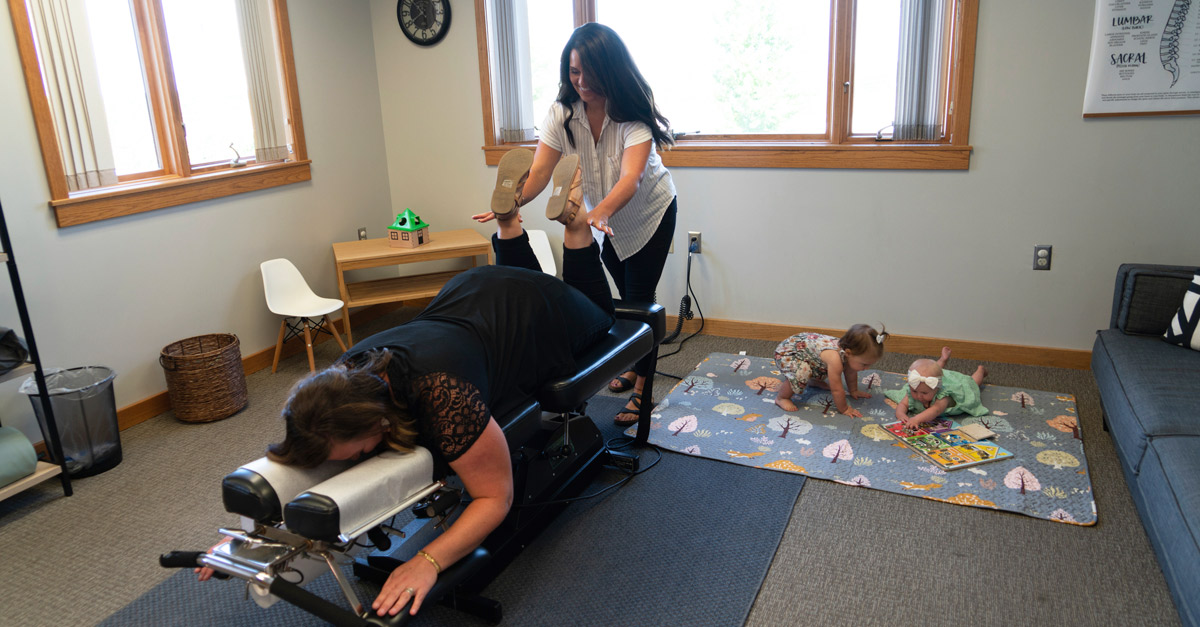
Dr. Maggie generally uses the Webster Technique for prenatal adjustments. It's a specific analysis and adjustment focused on the pelvis, designed for pregnant patients. Depending on your scans and exam, she may also use Diversified technique or gentle muscle work. Your baby is never touched during an adjustment.
Our tables have thoracic drops to accommodate your belly, and we use pregnancy pillows so you can lie comfortably. Moms often tell us the visit feels calm, which matters when the rest of the week is loud.
Insight scans and heart rate variability
New patients start with a CLA Insight scan, a gentle look at how the nervous system is working. It uses heart rate variability, thermal scanning and surface EMG. There's no radiation, and it takes about 10 to 15 minutes. We also keep track of heart rate variability over time as one way to see how mom's system is adapting. You can learn more on our CLA scanning page.
Who provides prenatal care here
Dr. Maggie Hunsicker is a fourth-generation chiropractor. She earned her Bachelor of Science in Exercise Physiology at Washburn University and her Doctor of Chiropractic from Palmer College of Chiropractic. She holds the CACCP credential through the ICPA and is Webster certified.
Dr. Kailee Logan earned her Doctor of Chiropractic from Cleveland Chiropractic University in 2022. She is Webster certified, an ICPA member and holds a 100-hour acupuncture certification.
When Should I Call My OB or Midwife Instead of Coming In?
Call your OB or midwife right away, before any chiropractic visit, if you have bleeding, severe pain, reduced fetal movement or contractions. Those signs need your medical team first.
Also contact your OB, midwife or urgent care if you have:
- A hard fall, a car accident or a direct blow to the belly
- Severe headache, vision changes or sudden swelling
- Fever, chest pain or trouble breathing
- Fluid leaking, or anything that simply feels wrong for your pregnancy
We work alongside your prenatal medical care. Keep your OB or midwife informed that you're seeing us. If they want a medical check first, do that, and we can help when it's safe.
What Do the First Visits Look Like If I'm Pregnant?
Visit one
You'll fill out intake forms in the Jane app before you arrive. Plan about 45 minutes. We'll talk through your health history, your goals, how far along you are and what's bothering you, then run your Insight scans along with range of motion and posture checks.
Visit two
Dr. Maggie goes over your scan results, revisits your goals and explains her recommendations. You'll receive your first adjustment at this visit, and we'll present financial options before you commit to a plan.
If a holiday trip is coming up soon, tell us the dates. We can help you think about a visit before you leave and when to come back after you're home.
How Much Does Care Cost?
We do not accept health insurance. We happily accept HSA and FSA cards. Cash payment is requested at the time of service, and all major credit cards are accepted.
We don't offer walk-in adjustments. Every person gets a customized care plan based on their goals and what we find at the initial visit. Care plans are offered as bundled visits over time at a discounted rate. You'll see your financial options at your second visit, before you commit to anything.
Come See Us Before You Hit the Road
Thrive Chiropractic
509 SW Jackson St, Topeka, KS 66603
Call or text: (785) 331-4515
Hours
Monday: 9am to 5pm
Tuesday: 9am to 2pm
Wednesday: 9am to 5pm
Thursday: 9am to 5pm
Friday through Sunday: Closed
We see expecting moms from west, east and north Topeka and across Shawnee County. Over 140 families and individuals have left us five-star Google reviews.
Frequently Asked Questions
Is chiropractic care safe during pregnancy?
When it's done by a practitioner trained in prenatal care, chiropractic is a gentle, drug-free option many expecting moms use for comfort. At Thrive, your baby is never touched during an adjustment, and we use pregnancy pillows and tables set up for a growing belly.
Can I come in if I'm already in the third trimester?
Yes. You can benefit from care at every stage. Many moms start when travel or daily discomfort becomes harder to ignore. Tell us your due date and any travel plans so we can tailor the visit.
What if I have bleeding, severe pain, less baby movement or contractions?
Call your OB or midwife first. Don't come in for an adjustment until they've cleared those signs.
Do you only see prenatal patients?
No. We see the whole family, from newborns to grandparents. Prenatal and pediatric care is a focus, and both doctors are Webster certified.