
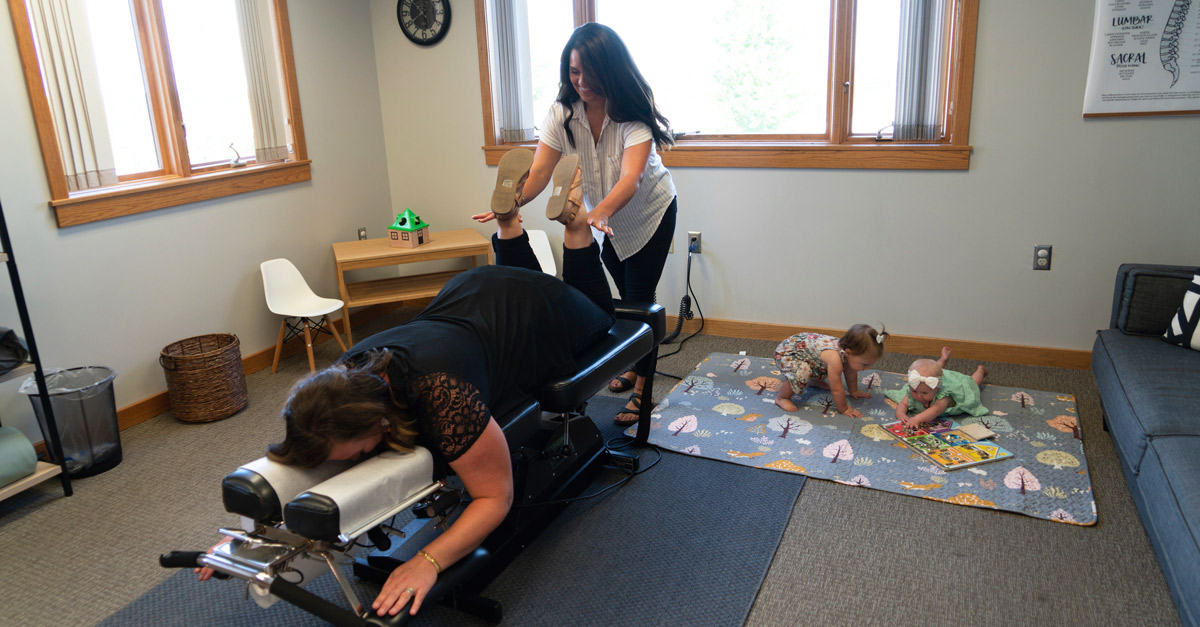

Anxiety is one of the most common health experiences in America, and Topeka is no exception. For many people, anxiety is treated exclusively as a mental health concern, addressed through therapy, medication, or both. Those approaches have genuine value. But there is a layer of the anxiety conversation that rarely gets enough attention: the role of the nervous system, and specifically the role of spinal health, in whether the body remains stuck in a state of chronic alert or finds its way back to rest — which is why Topeka families have been turning to Thrive Chiropractic as their trusted anxiety chiropractor in Topeka for nervous system-focused care.
At Thrive Chiropractic in Topeka, Dr. Maggie Hunsicker and Dr. Kailee Logan work with individuals and families dealing with anxiety, overwhelm, and the physical toll of chronic stress. Their approach is not to replace mental health care but to address the physiological foundation that makes it harder for the body to regulate itself. When the nervous system is functioning without interference, the body has a far greater capacity to manage the demands of daily life without tipping into the overwhelmed, depleted state that anxiety produces.
If you have been searching for an anxiety chiropractor in Topeka or looking for nervous system support that goes beyond conventional options, this article explains the connection between spinal health and emotional regulation, and what gentle chiropractic care at Thrive can offer.
The Nervous System Underneath Anxiety
Anxiety, at its physiological core, is a nervous system response. The autonomic nervous system has two primary modes: sympathetic activation (fight-or-flight) and parasympathetic activation (rest-and-digest). These two systems are designed to balance each other. According to the National Library of Medicine, chronic sympathetic dominance is associated with a wide range of physical and emotional health consequences.
The problem for many Topeka residents dealing with anxiety is that the nervous system becomes chronically biased toward sympathetic activation. The result is a nervous system running hot all the time: elevated heart rate, shallow breathing, muscle tension, digestive disruption, disrupted sleep, and the persistent mental restlessness that most people recognize as anxiety.
This chronic sympathetic overdrive is not simply a psychological pattern. It has a physical dimension that involves the spine and the nervous system pathways running through it. When spinal segments are misaligned or restricted, they create neurological interference that can influence the regulation of the autonomic nervous system — a relationship supported by peer-reviewed research on spinal manipulation and autonomic function.
How Spinal Misalignment Affects Stress Responses
The spine houses the spinal cord, the primary highway of the central nervous system. When vertebrae are misaligned or not moving properly — a condition chiropractors call subluxation — the surrounding nerve tissue experiences mechanical irritation that disrupts the quality of signaling traveling through those pathways.
The nerves that regulate autonomic function pass through the cervical and thoracic spine. Subluxations in these regions have a disproportionate influence on sympathetic and parasympathetic balance. A spine carrying chronic subluxation patterns makes it harder for the nervous system to shift out of sympathetic overdrive. That difficulty persists regardless of what the person is doing at the cognitive or behavioral level to manage their anxiety.
Chiropractic care does not treat anxiety as a diagnosis. It restores the nervous system's capacity to regulate itself. For many Topeka patients, that distinction makes all the difference.
What Chronic Nervous System Tension Looks Like
Many people in Topeka living with chronic sympathetic overdrive do not label what they are experiencing as anxiety. They describe it as feeling like they can never fully relax. At Thrive Chiropractic, patients commonly present with:
- Persistent tension headaches or neck stiffness that worsens during stressful periods
- Shallow breathing and tightness across the chest or upper back
- Digestive irregularities including nausea, bloating, or IBS patterns that worsen with stress
- Disrupted sleep, difficulty falling asleep, or waking with a racing mind
- Jaw clenching, teeth grinding, and TMJ tension
- Fatigue that does not resolve with rest — feeling wired and tired simultaneously
- Heightened sensitivity to noise, light, or sensory input
Gentle Chiropractic Adjustments for Nervous System Regulation
One of the most important things to understand about the chiropractic care at Thrive is that it is gentle. Dr. Maggie and Dr. Kailee are trained in specific, low-force techniques appropriate for patients across all ages — from newborns to grandparents — and specifically for individuals dealing with anxiety and heightened nervous system sensitivity.
A nervous system in sympathetic overdrive often responds poorly to abrupt or forceful input. The techniques used at Thrive Chiropractic in Topeka are calibrated to work with the nervous system rather than against it. Many patients describe a noticeable shift immediately after an adjustment — a sense of release in the upper back and neck, deeper breathing, and a temporary but genuine feeling of calm.
For patients interested in objectively measuring nervous system function and tracking progress, our CLA scanning technology provides detailed insight into autonomic balance and adaptability over time.
Chiropractic Support for Children and Families Dealing with Anxiety
Anxiety in children is increasingly common. The CDC reports that anxiety diagnoses in children have risen significantly over the past decade. At Thrive Chiropractic, Dr. Maggie and Dr. Kailee work with children of all ages whose parents are looking for natural, drug-free support.
Pediatric chiropractic adjustments at Thrive are extraordinarily gentle, typically using no more pressure than you would use to test the ripeness of a piece of fruit. Families in Topeka who come to Thrive often begin as a unit — parents seeking care for their own stress discover that their children benefit from the same nervous system support.
About Dr. Maggie Hunsicker and Dr. Kailee Logan
Dr. Maggie Hunsicker
Dr. Maggie Hunsicker is a fourth-generation chiropractor, which means chiropractic is not simply a profession she chose but a legacy she carries. Growing up immersed in the philosophy and practice of chiropractic from childhood gave Dr. Maggie a depth of understanding and conviction about what this care can do for families that is rare in the profession.
She completed her training at Palmer College of Chiropractic, the founding institution of the chiropractic profession, and brings both her family lineage and her formal education to every patient she sees in Topeka. Dr. Maggie's ties to Washburn University and the broader Topeka community further root her practice in the families she serves.
Dr. Kailee Logan
Dr. Kailee Logan brings her own depth of commitment to the Thrive practice, with a particular passion for pediatric and family-centered care. Together, Dr. Maggie and Dr. Kailee provide Topeka families with consistent, gentle, neurologically focused chiropractic care reflected in over 140 five-star Google reviews. Learn more about our doctors and our practice.
What to Expect at Your First Visit
A first visit at Thrive Chiropractic in Topeka begins with a conversation. For patients coming in with anxiety and nervous system concerns, that conversation covers your stress history, sleep patterns, physical symptoms, and what you have already tried. The physical evaluation includes spinal assessment, postural analysis, and where indicated, neurological testing. From there, Dr. Maggie or Dr. Kailee builds a care plan specific to your body and your goals. There are no rushed consultations here.
We accept most major insurance plans and encourage you to call us at (785) 331-4515 before your first visit so we can confirm your coverage and answer any questions.
New patients can take advantage of our new patient special offer to get started.
Natural, Drug-Free Anxiety Support for Topeka Families
For Topeka families looking for nervous system support in Topeka KS that does not involve medication or a psychiatric diagnosis, Thrive Chiropractic offers a physiologically grounded alternative. Thrive Chiropractic does not diagnose or treat anxiety as a psychiatric condition. What we do is assess and correct the spinal and nervous system patterns that make the body less capable of regulating itself effectively. For patients already working with a therapist or psychiatrist, chiropractic care at Thrive is designed to complement that care.
Frequently Asked Questions About Anxiety Chiropractic Care in Topeka
Can a chiropractor actually help with anxiety?
Chiropractic care does not treat anxiety as a psychiatric diagnosis. What it does is remove the spinal interference that keeps the nervous system stuck in sympathetic overdrive, the physiological state that underlies anxiety. When that interference is cleared, many Topeka patients report a meaningful reduction in baseline tension, improved sleep, and a greater capacity to manage stress. For best results, chiropractic care works alongside therapy and other mental health support rather than replacing it.
How many chiropractic visits will I need for anxiety support?
Most patients at Thrive Chiropractic begin noticing a shift in their nervous system baseline within four to six visits. The full course of care depends on how long subluxation patterns have been present and how the nervous system responds to adjustments over time. Dr. Maggie and Dr. Kailee will give you a clear care plan recommendation after your initial evaluation.
Is chiropractic care safe for children dealing with anxiety?
Yes. Pediatric adjustments at Thrive Chiropractic use extremely gentle, low-force techniques specifically adapted for children. The pressure used for a young child is typically no more than the light contact of a fingertip. Dr. Maggie and Dr. Kailee work with children from infancy through adolescence throughout the Topeka area.
Does Thrive Chiropractic accept insurance?
Yes, we accept most major insurance plans. Call our Topeka office at (785) 331-4515 before your first appointment and we will help you confirm your coverage and understand what to expect.
Ready to Begin?
If you are ready to explore what nervous system support through chiropractic care can do for you or your family in Topeka, Dr. Maggie and Dr. Kailee are ready to hear your story. Visit our Topeka office location. Thrive Chiropractic is located at 509 SW Jackson St, Topeka, KS 66603.
Thrive Chiropractic
509 SW Jackson St, Topeka, KS 66603
📞 (785) 331-4515 · 🌐 thrivechiroks.com