
A migraine is not a bad headache. Anyone who has lived through one knows the difference. The throbbing that builds until light feels like an assault, the nausea, the aura that warns you an hour before it hits, the day or two lost to a darkened room. For migraine sufferers across Topeka, the cycle of triggers, medications, and recovery can shape entire weeks.
If you've been managing migraines with medication alone and want to explore what else might help, chiropractic care is worth understanding. At Thrive Chiropractic in downtown Topeka, Dr. Maggie Hunsicker and Dr. Kailee Logan work with patients seeking a natural, drug-free approach to reducing migraine frequency and intensity.
What Makes a Migraine Different
Migraines are a neurological condition, not simply severe head pain. They involve changes in nerve signaling, blood flow, and brain chemistry.
Common Migraine Characteristics
- Throbbing or pulsing pain, often on one side of the head
- Sensitivity to light, sound, or smell
- Nausea and sometimes vomiting
- Visual disturbances or aura preceding the attack
- Pain that worsens with physical activity
- Attacks lasting from hours to several days
The National Institute of Neurological Disorders and Stroke describes migraine as a common neurological disorder affecting millions of Americans, with women experiencing it roughly three times as often as men.
The Neck Connection Most People Miss
Here is what often goes unexamined: the upper cervical spine sits directly beneath the brainstem, and the nerves exiting that region share pathways with the trigeminal nerve system, which is central to migraine pain.
Why the Upper Neck Matters
The top three cervical vertebrae have nerve connections that converge with the trigeminal nerve in an area of the brainstem called the trigeminocervical nucleus. This convergence means irritation originating in the neck can be perceived as pain in the head and face.
For some migraine sufferers, this creates a situation where cervical dysfunction contributes to or triggers attacks, even though the pain is felt entirely in the head.
Cervicogenic Headache vs. Migraine
Some head pain originates directly from the neck and is classified as cervicogenic headache. It can closely mimic migraine, which is one reason accurate assessment matters. Some Topeka patients discover their "migraines" have a significant cervical component that responds well to structural care.
How Chiropractic Care May Help
Chiropractic care for migraines focuses on the cervical spine and nervous system function rather than on treating the migraine itself.
Restoring Cervical Alignment
Adjustments address restriction and misalignment in the upper neck, reducing mechanical stress on the structures that share pain pathways with the head.
Reducing Muscular Tension
Chronic tension in the suboccipital muscles, upper traps, and neck can contribute to head pain and may act as a trigger for susceptible individuals.
Supporting Nervous System Regulation
The autonomic nervous system influences vascular tone and stress response, both relevant to migraine. Chiropractic care aims to support balanced nervous system function.
Research indexed through the National Library of Medicine has examined spinal manipulative therapy for migraine, with some studies reporting reductions in migraine days and intensity. Findings vary across studies, and we're straightforward with Topeka patients that chiropractic is not a guaranteed solution. What we can offer is a thorough assessment and honest guidance about whether your presentation suggests a cervical component worth addressing.
Learn more about our approach on our chiropractic care page.
Who May Be a Good Candidate
Chiropractic care tends to be most relevant for migraine sufferers who also have:
- Neck pain or stiffness accompanying attacks
- Tension that builds in the neck and shoulders before a migraine
- A history of whiplash, concussion, or neck injury
- Pain that begins at the base of the skull and spreads forward
- Migraines that worsen with certain neck positions or postures
- Desk-based work with sustained forward head posture
If your migraines have no cervical involvement at all, chiropractic may be less relevant, and we'll tell you that directly rather than commit you to a plan unlikely to help.
What Assessment Looks Like at Our Topeka Office
Your first visit centers on understanding your specific migraine pattern.
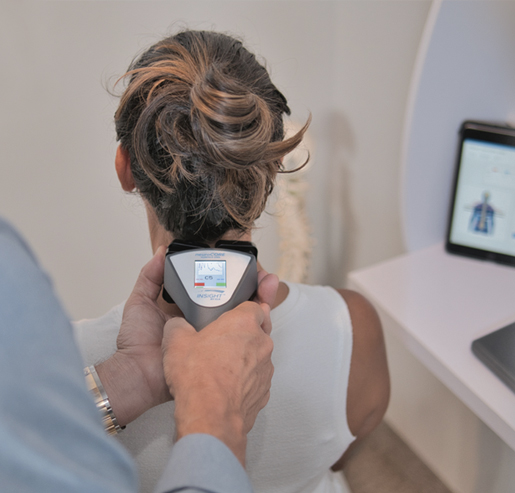
We'll discuss frequency, duration, triggers, aura, prior injuries, medication use, and what your attacks actually feel like. Then we assess your cervical spine: range of motion, joint restriction, muscular tension, and postural alignment.
From there, you get a clear explanation of what we found and an honest assessment of whether chiropractic care makes sense for your situation. If we believe another provider would serve you better, we'll say so.
Coordinating With Your Medical Care
This deserves emphasis. Chiropractic care for migraines is complementary, not a replacement for neurological or medical care.
We encourage every Topeka patient to maintain their relationship with their primary care physician or neurologist and to keep them informed. Migraine management often works best as a combined approach, and certain presentations require medical evaluation.
Seek prompt medical attention for a sudden severe headache unlike any you've had before, headache with fever and stiff neck, headache following head trauma, or headache with confusion, weakness, or vision loss.
Lifestyle Factors That Support Fewer Attacks
Alongside care, these habits are commonly recommended for migraine management:
- Keep a consistent sleep schedule. Irregular sleep is a frequent trigger.
- Don't skip meals. Blood sugar drops can precipitate attacks.
- Hydrate steadily throughout the day.
- Track your triggers in a simple log to identify patterns.
- Manage stress deliberately, since the letdown after stress is a known trigger.
- Watch your workstation setup. Sustained forward head posture increases cervical strain.
- Moderate caffeine rather than fluctuating heavily.
Migraine Care for the Whole Family
Migraines affect children and teens more often than many parents realize, and they frequently go undiagnosed because kids describe symptoms differently than adults.
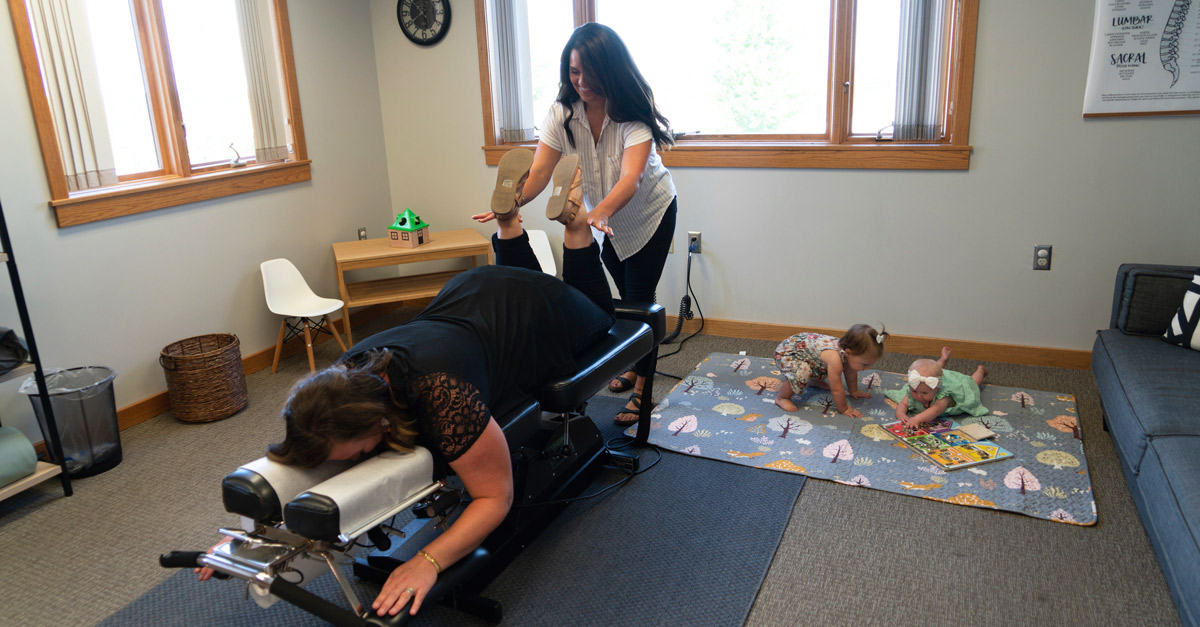
Our pediatric chiropractic care uses gentle techniques appropriate for young patients. Hormonal shifts also make migraines common during pregnancy for some women, and our prenatal chiropractic care is adapted safely for expecting moms in Topeka.
Why Topeka Patients Choose Thrive
- Fourth-generation expertise. Dr. Maggie Hunsicker brings four generations of chiropractic heritage to her practice.
- Local roots and rigorous training. Dr. Maggie completed her Exercise Physiology degree at Washburn University in Topeka before earning her Doctor of Chiropractic from Palmer College of Chiropractic.
- A doctor who listens. Dr. Kailee Logan is known for taking time with patients, which matters when you're describing something as individual as a migraine pattern.
- Community trust. More than 140 five-star Google reviews from Topeka families.
Visit Thrive Chiropractic in Topeka, KS
We're located in downtown Topeka, convenient to College Hill, Westboro, Potwin, Oakland, and communities throughout Shawnee County.
Thrive Chiropractic
509 SW Jackson St, Topeka, KS 66603
Phone: (785) 331-4515
Office Hours:
Monday: 9 AM to 5 PM
Tuesday: 9 AM to 2 PM
Wednesday: 9 AM to 5 PM
Thursday: 9 AM to 5 PM
Friday through Sunday: Closed
Tired of Losing Days to Migraines? Let's Talk in Topeka
If your migraines come with neck tension, if you have a history of neck injury, or if you simply want to understand whether a cervical component is contributing to your attacks, an assessment is a reasonable next step.
Take advantage of our New Patient Special or reach out through our contact page to schedule. We'll give you an honest evaluation and clear guidance either way.
Call or text us today at (785) 331-4515.
Frequently Asked Questions
Can chiropractic care cure my migraines?
No, and we won't claim otherwise. Migraine is a neurological condition without a cure. Chiropractic care addresses cervical spine function and may help reduce frequency or intensity for patients whose migraines have a neck-related component. Results vary considerably.
How do I know if my migraines are related to my neck?
Common indicators include neck pain or stiffness with attacks, pain that starts at the base of the skull, a history of neck injury, or migraines that worsen with certain postures. An assessment at our Topeka office can clarify this.
Should I stop my migraine medication?
Never stop or change prescribed medication without consulting the physician who prescribed it. Chiropractic care is complementary to medical management, not a substitute for it.
How long before I might notice a difference?
This varies widely. Some patients notice changes within a few weeks, while others with long-standing patterns need more consistent care. We'll give you a realistic timeline after your assessment rather than a generic promise.
Is it safe to adjust the neck?
Cervical adjustment is widely performed and generally well tolerated. We assess thoroughly beforehand, use techniques appropriate to each patient, and discuss any concerns openly during your consultation.
Do you treat children with migraines?
Yes. Migraines in children and teens are more common than many parents expect. We use gentle, age-appropriate techniques for young patients in Topeka.
What if chiropractic isn't right for my situation?
We'll tell you. If your assessment doesn't suggest a cervical component, or if your presentation warrants medical evaluation, we'll say so and point you in a better direction.
Medical Disclaimer: This article is for informational purposes only and is not a substitute for personalized medical advice. Migraine is a neurological condition that warrants medical evaluation. Please consult your physician or neurologist regarding diagnosis and treatment, and seek prompt care for any sudden, severe, or unusual headache.
About the Authors: Dr. Maggie Hunsicker, DC, is a fourth-generation chiropractor and Palmer College of Chiropractic graduate. Dr. Kailee Logan, DC, is dedicated to family-centered care. Together, they lead Thrive Chiropractic in Topeka, KS.